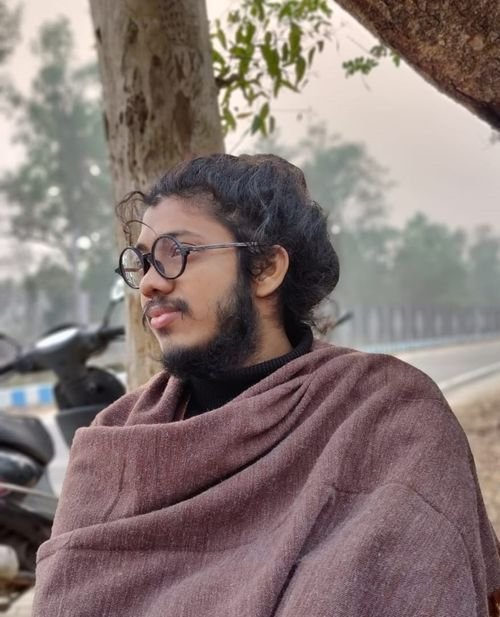
Rabiul Khan is an artist based in Santiniketan. He completed his BFA and MFA in Painting from Kala Bhavana, Visva Bharati University. Khan’s work focuses on community-based practices, critically examining contemporary identifications and exploring power dynamics within specific geographies. His interdisciplinary approach fosters local relationships and generates site-specific, interactive installations that provoke discussion and question societal norms, ultimately constructing alternative pedagogical spaces through research. Khan is dedicated to collective processes of working and learning, employing workshop methods that are both interactive and collaborative. He is in the process of establishing GABAA in Santiniketan, alongside fellow practitioners Himanshu Sarma, Ritushree Mondal, and Surajit Mudi. This initiative aims to facilitate research-based art activities, re-examining history to explore new methodologies that position art as a vital aspect of life. The group seeks alternative approaches toward pedagogy, archiving, research, and practice. He has collaborated with the Film Division of the Ministry of Information and Broadcasting, Government of India, on two projects. Khan was honoured with the Inlaks Fine Art Award in 2023 and the Prince Claus Fund Seed Award in 2024.
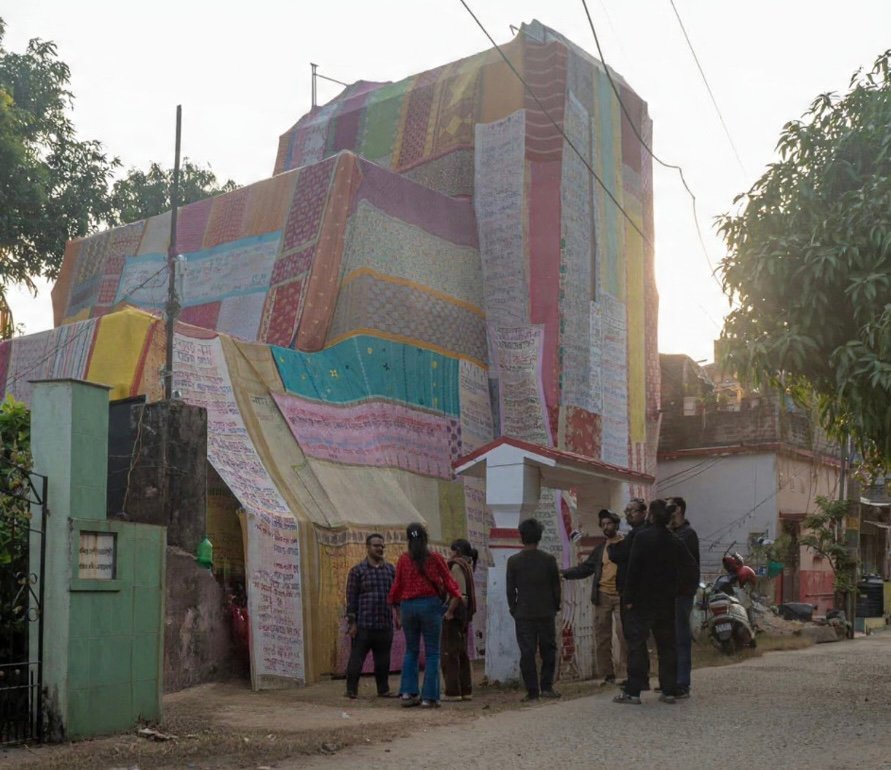
In this exhibition, threads of cloth and memory intertwine to tell stories too often overlooked. This project doesn’t turn its gaze towards professional artisans but instead towards the homemakers of Birbhum. They are not trained weavers or embroiderers by trade; they are mothers, daughters, and wives, sewing in quiet domestic spaces for their families. Historically, these women created kanthas not for sale but for their own use, stitching warmth and care into everyday objects. This project is more than an exploration of ‘craft’. It is an excavation of memory and presence. The artists – Himangshu Sarma, Rabiul Khan, Ritushree Mondal, and Surajit Mudi, – are not merely facilitators but collaborators, engaging with these women to create what they call a ‘pedagogical site’. It is a place of mutual learning, where the process of making becomes a dialogue, not only between artist and homemaker but between past and present, self and community.