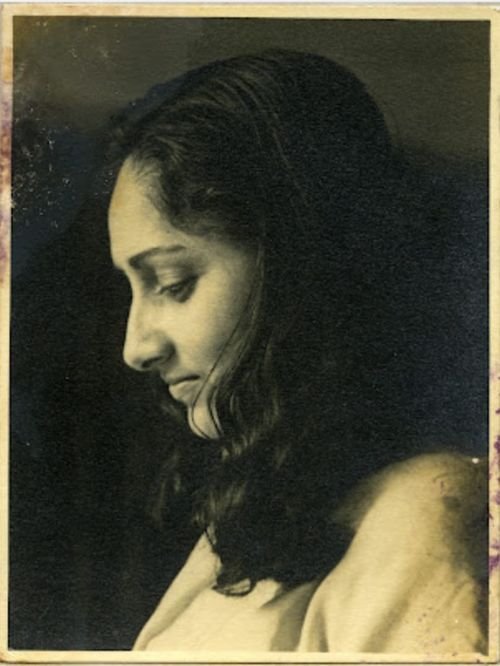
Arundhati Devi was a luminary of Bengali cinema in the 1950s and ’60s, a multifaceted artist whose impact transcended industry standards. Renowned not only as a great actress, she was also a director, producer, singer, composer and painter. Her cinematic debut in Mahaprasthaner Pathe (1952) signalled the trajectory of her career, in challenging societal norms, as she did in films like Chalachal (1956) and Jhinder Bondi (1961). Born into the artistic Guhathakurta family in Dhaka, Devi’s influences included an early education in Santiniketan, where she honed skills in music and dance under the tutelage of prominent mentors. Her sensibilities were tied to Tagore’s own, shaping her outlook on art as a space of joy rather than a mere means of livelihood. As a pioneering filmmaker, she directed five notable films, adapting literary works that highlighted marginalised voices and explored young love. Her legacy as a cultural icon endures – she is celebrated as the alchemy of elegance, intellect and artistic integrity embodied. Devi is a powerful symbol for the modern woman in cinema, in dialogue with a rapidly changing society.
A budding writer, a talented singer and radio artist, a thinking actress, a strong-willed director and producer…Arundhati Devi (April 29, 1924–October 16,1990) wore many hats in the course of a rich and varied career. However, she actually never saw herself as a star. While other actresses were attracted to the glamour of the film world, Arundhati sought less of public fame and more of intellectual satisfaction and independence through the skills she honed.
Even though the title of our centenary tribute may then seem ironic, it speaks to her radiant spirit, and the fierce devotion to personal and professional ideas and practices, which helped her chart new territories. She carved her own space in largely male-dominated landscapes, bringing worth to fields of art and entertainment, which were often still associated with only commercialism and not respectability. Arundhati’s close friend, the writer Gour Kishore Ghosh, recognised this luminescence in her personality, He conveyed it with a humorous metaphor in one of his stories, where the fictional Brojo da, gets lost in the jungles of Congo, and turns to his favourite “star” Arundhati for hope and help, thus inspiring the words Tarar naam Arundhati.
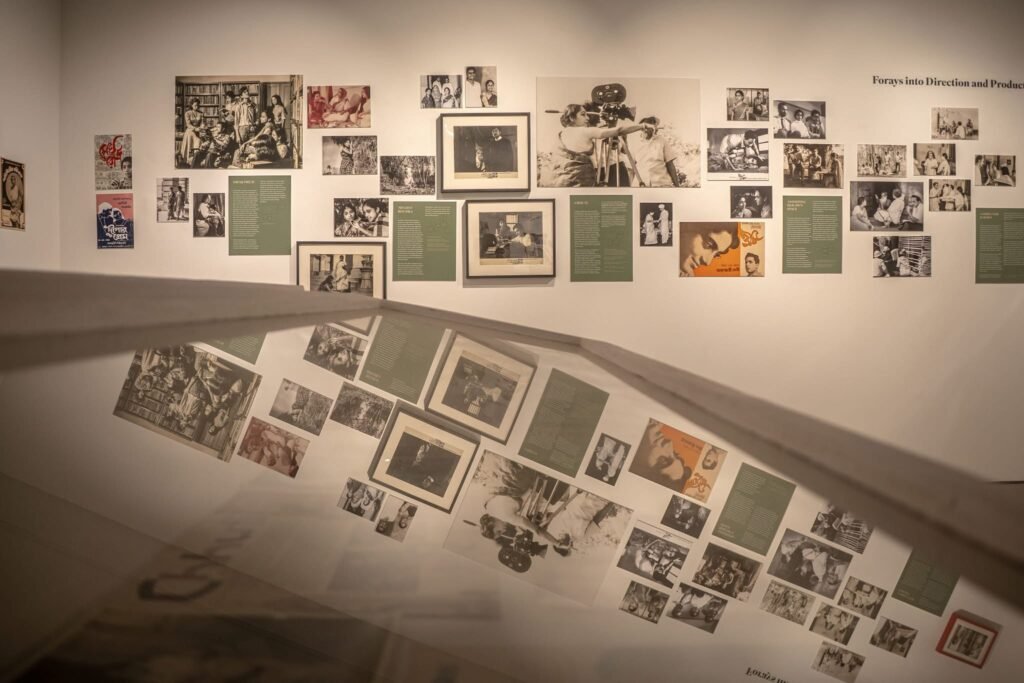
This archival aims to chart not just Arundhati’s individual story. but place her in her times and the larger industry she was part of. Even as the wealth of this archive reveals fascinating new insights, it has constantly had to fight the challenges of losses. A large number of Arundhati’s films no longer survive, and the ones that remain are often in poor quality. Arundhati left behind no autobiography and gave only a limited number of interviews. Many of the people she closely engaged with have also passed on. More importantly, film scholarship in Bengal and India has left her and the stories of many others out of its annals.
The history of a moving art form then has had to be largely reconstructed through film stills, booklets, lobby cards, posters, handwritten and typed documents, working scripts and correspondences, magazines and newspapers, and the oral memories of those who knew her. Against the lapses of public histories, small familial, personal and institutional collections have held the candles of remembrance. It is with these resources that this exhibition hopes to help older generations recall and newer generations discover the “star” that was and is Arundhati.